
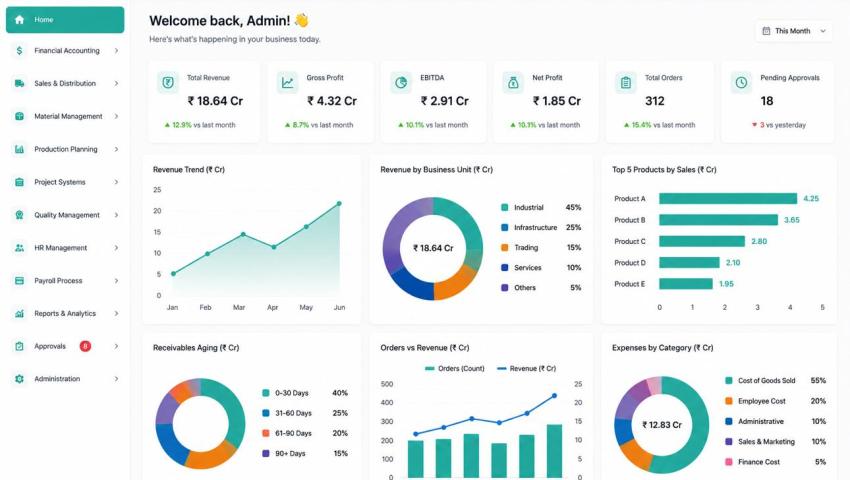
CTIA ERP System
A comprehensive Enterprise Resource Planning (ERP) system developed by CTIA Uganda to help businesses and organizations digitize, integrate and manage their daily operations from one centralized platform. The system brings together financial management, accounting, income and expenditure tracking, procurement, inventory, human resource administration, payroll, business operations, reporting and pe
CTIA Enterprise Resource Planning (ERP) System is an integrated business management and administrative software solution developed to help organisations streamline their operations, improve financial control and manage organisational resources through a centralised digital environment. Accessed at https://erp.ctiauganda.org/
The platform is designed to simplify complex business processes by bringing different departments, transactions, operational activities and management functions together in one system.
Instead of relying on disconnected spreadsheets, manual records and separate applications, organisations can use an integrated ERP environment to organize their business information, monitor transactions, manage resources and generate reports that support effective management.
The system is intended to support businesses, companies, institutions and organizations seeking to modernize their administrative and operational processes. https://erp.ctiauganda.org/
Key Features and Capabilities
1. Business Dashboard and Performance Monitoring
Centralized business management dashboard.
Real-time visibility of recorded business figures.
Financial performance summaries.
Income, expenses and net profit monitoring.
Date-filtered performance analysis.
Daily, weekly, monthly, yearly and all-time readings.
Visual financial charts and business indicators.
2. Financial Management and Accounting
Business income recording and monitoring.
Expense management and categorisation.
Supplier bills management.
Customer payment tracking.
Cash and bank account monitoring.
Profit and loss analysis.
Financial ratios and liquidity indicators.
Cash-flow monitoring and planning.
3. Invoicing and Customer Management
Professional invoice management.
Customer account registration.
Customer transaction records.
Invoice payment tracking.
Outstanding customer balances.
Accounts receivable monitoring.
Customer collection performance analysis.
Identification of top-paying customers.
4. Expense and Supplier Management
Expense recording and tracking.
Expense category management.
Supplier registration and records.
Supplier bills management.
Outstanding supplier obligations.
Supplier payment monitoring.
Expense category performance analysis.
Monitoring of unpaid bills.
5. Stock and Inventory Management
Inventory item management.
Stock value monitoring.
Inventory performance indicators.
Stock ratio analysis.
Inventory visibility for business operations.
Support for businesses dealing in physical products.
6. Cash Management and Financial Planning
Cash balance monitoring.
Bank account balance tracking.
Cash remaining after outstanding bills.
Operating cash reserve targets.
Cash reserve shortfall analysis.
Liquidity assessment.
Financial planning recommendations.
Cash-flow priorities and management.
7. Staff and Human Resource Management
Staff and employee records.
Staff account management.
User account assignments.
Salary management.
Employee payment records.
Payslip management.
Staff access management.
Role-based permissions.
8. Payroll and Salary Management
Salary transaction management.
Employee salary records.
Salary payment tracking.
Payslip generation and management.
Monitoring of outstanding salary obligations.
Integration of salary expenses into business financial reporting.
9. Business Intelligence and AI-Powered Analysis
AI-generated SWOT analysis.
Business strengths and weaknesses assessment.
Identification of growth opportunities.
Business risk analysis.
AI-powered break-even analysis.
Income and expense trend analysis.
Business performance recommendations.
Data-driven management insights.
10. Financial Forecasting and Income Targets
Future income projections.
Future expense forecasts.
Estimated future net profit.
Monthly income target monitoring.
Financial trend analysis.
Service revenue forecasting.
Business growth planning.
Performance comparison against income targets.
11. Business Performance Analytics
Monthly income and expense comparisons.
Profitability indicators.
Customer payment analysis.
Service revenue analysis.
Top-paying customer rankings.
Expense category rankings.
Financial charts and summaries.
Business performance reports.
12. Reports and Document Export
Comprehensive business performance reports.
Financial analysis reports.
AI-generated business insights.
Microsoft Word report export.
Print-ready reports.
PDF report saving.
Customised reporting and date filtering.
Exportable business analysis for management review.
13. Business Calendar and Notifications
Business calendar management.
Important date tracking.
Reminders and notifications.
Business activity scheduling.
Monitoring important operational deadlines.
14. Business Profile and Document Management
Business profile management.
Organisation information management.
Business documents and records.
Centralised business settings.
Organised administrative information.
15. Security and User Access Management
Secure user authentication.
Staff and administrator accounts.
Role-based access control.
Permission management.
Controlled access to sensitive financial information.
Secure password management.
Industries and Businesses Supported
CTIA Business ERP is designed for different business environments, including:
Project Objectives
The primary objectives of developing CTIA Business ERP include:
Digitising business accounting and financial management.
Integrating business operations into one centralised platform.
Improving the accuracy of income and expenditure records.
Strengthening financial accountability and transparency.
Simplifying invoice, customer and supplier management.
Improving stock and inventory visibility.
Supporting effective payroll and staff administration.
Providing management with accurate financial performance indicators.
Using AI-powered insights to support business decisions.
Improving financial forecasting and business planning.
Reducing paperwork and disconnected administrative processes.
Supporting sustainable business growth through technology.
Why CTIA Business ERP?
CTIA Business ERP goes beyond basic bookkeeping. It combines financial management, business operations, performance monitoring and intelligent business analysis in one integrated environment.
Its date-filtered financial dashboards help business owners understand their actual recorded performance over different periods. Its AI-powered SWOT and break-even analysis provide additional insights, while forecasting tools help businesses plan ahead.
The system also provides visibility into unpaid supplier bills, outstanding customer invoices, cash reserves, salary obligations and operating expenses, helping management understand the financial position of the business more clearly.
With dedicated tools for staff management, permissions, reporting and business administration, CTIA ERP offers an organised digital workspace for managing essential business activities.
Project Significance and Impact
CTIA Business ERP represents an important step towards the digital transformation of businesses in Uganda and beyond.
Many businesses still depend on manual bookkeeping, disconnected spreadsheets and fragmented systems to manage their daily operations. These approaches can make it difficult to maintain accurate records, monitor financial performance, identify outstanding obligations and make timely management decisions.
This platform addresses these challenges by bringing essential business information together in one organised system.
Through integrated accounting, expense management, invoicing, customer records, supplier management, inventory monitoring, payroll, financial forecasting and AI-powered analysis, businesses gain a clearer understanding of their operations and financial position.
The platform is designed to help business owners, managers, accountants and authorized employees work more efficiently, improve accountability and make informed decisions based on recorded business information.
CTIA Business ERP is built around one central idea: One Powerful Platform. Every Business.
Project Information
| Item | Details |
|---|---|
| Project Name | CTIA Business ERP |
| Industry | Business Management & Enterprise Software |
| Project Category | Enterprise Resource Planning (ERP) |
| Project Type | Integrated Business Control & Accounting System |
| Target Users | SMEs, Retailers and Business Organizations |
| Platform | Web-Based Application |
| Key Technologies | Business Automation, Financial Analytics and AI Insights |
| Developer | CTIA Uganda |
| Location | Uganda |
| Live Website | erp.ctiauganda.org |
CTIA Business ERP
Visit Live ERP System Visit CTIA Uganda At https://erp.ctiauganda.org/
Developed by CTIA Uganda – Innovative Systems. Smart Software. Better Business Performance.